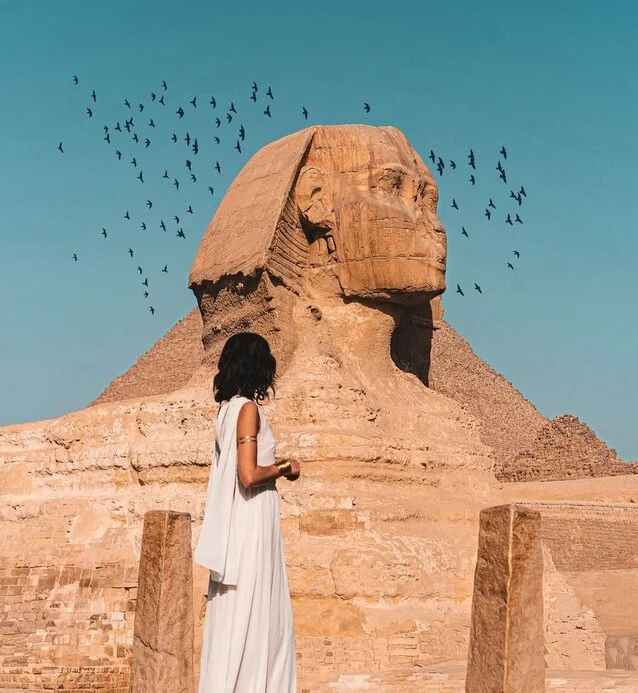
Egypt is often associated with monumental temples, desert landscapes, Nile cruises, and large Red Sea resorts. But there is another way to experience the country: with more time, more local connection, and greater attention to the environmental, cultural, and economic impact of your journey.
For travelers who value sustainability without compromising comfort, Egypt offers an increasingly diverse range of options. These include desert ecolodges, sustainability-certified accommodation, nature-based experiences, locally guided cultural journeys and private itineraries designed around quality rather than quantity.
The key is knowing what sustainable travel actually means.
A hotel using solar panels is not automatically a fully sustainable property. An ecolodge is not necessarily independently certified. And a luxury resort should not be described as sustainable simply because it has a recycling programme.
Responsible tourism is broader.
It includes how a property manages water and energy, handles waste, benefits local communities, protects cultural heritage, and manages visitors' behaviour in fragile natural environments.
This guide explains how to approach sustainable tourism in Egypt realistically, where responsible choices can make the greatest difference, how to understand hotel certifications, and how to combine environmental awareness with a private luxury holiday.
What Does Sustainable Tourism in Egypt Really Mean?
Sustainable tourism is about managing the long-term relationship between visitors, destinations, communities, and the environment.
The Global Sustainable Tourism Council (GSTC) organizes its hotel standard around four broad areas: effective sustainability management, socioeconomic benefits for local communities, protection of cultural heritage, and reduction of environmental impacts.
These principles are particularly relevant in Egypt.
Water is a critical resource in an arid country. Energy efficiency matters across hotels and resorts. Waste management becomes more challenging in remote desert and coastal environments. At the same time, Egypt's tourism appeal depends heavily on archaeological heritage, traditional communities, desert ecosystems, and the marine environment of the Red Sea.
For travelers, sustainability therefore goes beyond choosing a "green" hotel.
A more responsible Egypt itinerary might involve:
- Choosing accommodation with a recognized certification or clearly documented sustainability practices.
- Supporting local businesses, guides, and artisans where appropriate.
- Respecting archaeological sites and protected natural areas.
- Reducing unnecessary single-use plastic.
- Using water thoughtfully.
- Choosing responsible wildlife and marine activities.
- Spending more time in fewer destinations rather than creating an unnecessarily rushed itinerary.
In simple terms, sustainable travel in Egypt is about making better decisions throughout the journey, not finding one perfect product.
Is Egypt a Good Destination for Sustainable Travel?
Yes, but sustainability varies considerably between destinations, hotels, and tourism providers.
Egypt has a large and diverse tourism industry. Travelers can choose from international hotel groups, independent boutique properties, desert ecolodges, Nile experiences, community-oriented activities and nature-based excursions.
That diversity is an advantage, but it also means that travelers should look beyond marketing language.
A property may use solar energy without holding a formal sustainability certification. A small lodge may rely heavily on traditional materials and local employment without belonging to a recognized certification programme. A large resort may have extensive environmental-management systems while still operating at a much larger scale than a small ecolodge.
These are different models.
The best approach is to ask what can actually be demonstrated.
Before booking, consider:
- Does the property hold a recognized sustainability certification?
- Are its environmental practices clearly explained?
- Does it have documented water-management measures?
- How does it manage energy consumption?
- What happens to waste?
- Does it employ people from the local area?
- Does it purchase products and services locally?
- How does it approach cultural heritage?
- Are its sustainability claims specific rather than vague?
This evidence-based approach is especially useful for travelers who are already accustomed to comparing sustainability standards and certifications in European tourism.
Green Star Hotels in Egypt: What Travelers Should Know
One of the most important sustainability programmes in Egypt's hotel sector is the Green Star Hotel programme.
The Green Star Hotel Certificate is awarded to tourist accommodation businesses in Egypt for commitments relating to environmentally friendly management and social responsibility. GSTC lists the Green Star Hotel Standard among its GSTC-Recognized Standards for hotels and accommodations.
The programme operates under the patronage of Egypt's Ministry of Tourism and was developed as a public-private initiative involving Egyptian and German tourism stakeholders, Egyptian tourism authorities and German development cooperation. Its purpose includes improving environmental awareness and the environmental performance of Egypt's accommodation sector.
What Does GSTC Recognition Mean?
This distinction is important.
A hotel should not be described as "GSTC-certified" simply because it has a Green Star certification.
GSTC explains that its recognition applies to the sustainability standard itself. GSTC does not directly certify hotels. Recognition means the standard has been reviewed and deemed equivalent to the relevant GSTC sustainability standards. It does not, by itself, guarantee the reliability of the certification process.
For travelers, this is a good example of why transparent sustainability language matters.
Instead of saying:
"This hotel is GSTC-certified."
A more accurate description would be:
"The Green Star Hotel Standard is recognized by GSTC."
That difference may seem technical, but it is exactly the kind of distinction that helps travelers avoid greenwashing.
Where to Experience More Responsible Tourism in Egypt
Egypt's most interesting sustainable travel opportunities are not concentrated in one region. Different destinations offer different ways to travel more consciously.
Siwa Oasis: Eco-Lodges, Traditional Architecture and Slow Travel
Siwa is one of Egypt's most distinctive destinations for travelers interested in nature, culture and small-scale accommodation.
The oasis is surrounded by desert and known for palm groves, salt lakes, springs, and a distinctive local architectural tradition. Some accommodations are designed around traditional materials and the character of the oasis rather than conventional resort architecture.
That makes Siwa particularly appealing for travelers who want a slower alternative to the classic Egypt circuit.
However, an "eco-lodge" label should not automatically be treated as a certification.
When choosing accommodation in Siwa, look beyond the building itself.
Ask how the property:
- manages water,
- generates or conserves energy,
- handles waste,
- employs local residents,
- sources food and services,
- and contributes to the local economy.
The best Siwa experience is often not about adding more activities. It is about spending enough time in the oasis to appreciate its landscape and culture.

Fayoum: Nature, Heritage and Local Experiences
Fayoum offers another form of responsible travel.
Its appeal comes from a combination of desert scenery, lakes, villages, traditional crafts, and protected natural areas.
Wadi Al-Hitan, the Valley of the Whales, is an especially useful example of the relationship between tourism and conservation. UNESCO identifies it as a World Heritage property containing important fossil remains and highlights controlled access and designated visitor routes as part of protecting the site.
The lesson for travelers is straightforward:
A sustainable experience is not necessarily one that removes people from nature. It can be one that controls access, protects sensitive resources, and creates economic value for nearby communities.
Fayoum works particularly well as an addition to a Cairo itinerary for travelers who want to experience landscapes and local life beyond the major monuments.

Luxor and Aswan: Responsible Cultural Travel
Luxor and Aswan demonstrate that sustainable tourism is not only about environmental technology.
Here, cultural sustainability is equally important.
A responsible itinerary can:
- Use qualified local guides.
- Allow sufficient time at archaeological sites.
- Support local restaurants and artisans.
- Include authentic local experiences.
- Respect community traditions.
- Avoid treating cultural encounters as staged performances.
- Reduce unnecessary travel between attractions.
Aswan is particularly suitable for travelers interested in a slower pace, Nile landscapes, and Nubian culture.
The goal is not to avoid tourism.
It is to ensure that tourism contributes to the preservation and appreciation of the destination rather than turning cultural heritage into a rushed checklist.

The Red Sea: Responsible Beach, Diving and Snorkeling
The Red Sea presents a different sustainability challenge.
Its greatest natural assets include coral reefs and marine ecosystems, so responsible tourism depends heavily on visitor behavior and the practices of diving and snorkeling operators.
Travelers should:
- Never stand on or touch coral.
- Avoid feeding marine animals.
- Follow rules in protected areas.
- Avoid purchasing products made from protected marine species.
- Choose experienced operators.
- Follow instructions designed to reduce environmental damage.
Marsa Alam, El Gouna, Hurghada and Sharm El Sheikh can all form part of a responsible Egypt itinerary.
However, sustainability should be assessed at the hotel and activity level, rather than assumed simply because a destination is associated with environmental tourism.

How to Travel More Responsibly in Egypt
You do not need to turn your holiday into an environmental experiment. A few practical choices can make your trip more responsible.
Reduce Single-Use Plastic
A reusable bottle is one of the simplest ways to reduce unnecessary plastic.
Where safe and appropriate refill facilities are available, use them. Avoid disposable items when you do not need them, and support businesses that have clear waste-reduction practices.
Use Water Carefully
Water deserves particular attention in Egypt.
Simple habits include:
- Taking shorter showers.
- Avoiding unnecessary towel and linen changes.
- Turning off taps while brushing your teeth.
- Following hotel water-saving guidance.
- Asking accommodation providers about their water-management measures.
Support Local Businesses
Tourism can create greater local economic value when travelers spend part of their budget with businesses based in the destination.
Consider:
- Local restaurants.
- Independent Egyptian guides.
- Local artisans.
- Egyptian food producers.
- Small cultural businesses.
- Community-based activities.
Buying locally should not mean buying something simply because it is marketed as "traditional." Authenticity, quality, and fair business practices remain important.
Respect Archaeological Sites
Egypt's heritage is one of the country's greatest tourism assets and also one of its most sensitive. Visitors should follow site rules, remain on designated routes, and avoid touching monuments or archaeological remains.
At sensitive natural and archaeological locations, visitor-management measures can be an important part of conservation.
Choose Ethical Animal Experiences
Animal welfare is part of responsible tourism.
Be cautious with experiences that involve forced performances, inappropriate handling, or poor living conditions.
For marine wildlife, observe rather than touch or feed.
For desert experiences, choose operators that respect the environment and avoid unnecessary damage to fragile landscapes..
Can Sustainable Travel in Egypt Still Be Luxurious?
Yes. In fact, private travel can make responsible planning easier. Luxury does not have to mean maximum consumption. For many travelers, luxury means:
- A private vehicle.
- A knowledgeable personal guide.
- Flexible schedules.
- High-quality accommodation.
- Fewer hotel changes.
- Authentic local experiences.
- More time at each destination.
A private itinerary can also eliminate some unnecessary movement.
Instead of trying to combine Cairo, Luxor, Aswan, the Red Sea, and a desert oasis in a single rushed programme, travelers can prioritize the destinations that matter most to them.
The result can be a journey that feels more comfortable, more personal and more responsible at the same time.
Sustainable Egypt Itinerary Ideas
The following routes are planning frameworks rather than fixed packages.
7 Days: Cairo and Luxor
Best for: first-time visitors focused on history and culture.
Combine Cairo's major attractions with several nights in Luxor.
Rather than adding multiple destinations, allow enough time to explore the archaeological landscape properly.
10 Days: Cairo, Luxor and Aswan
Best for: travelers who want a deeper Nile Valley experience.
Combine Cairo with Luxor and Aswan and choose a Nile experience appropriate to your preferred travel style.
14 Days: Cairo, Nile Valley and the Red Sea
Best for: travelers who want culture and relaxation.
Combine Cairo, Luxor and Aswan with a longer stay on the Red Sea, such as Marsa Alam or El Gouna.
The Red Sea portion can be used as genuine downtime rather than another tightly scheduled sequence of activities.
Eco-Luxury Alternative: Cairo, Fayoum and Siwa
Best for: repeat visitors and travelers interested in nature and local culture.
This route moves away from the conventional Egypt itinerary and focuses on desert landscapes, oasis life, traditional architecture, and slower travel.
It can be particularly attractive for travelers who have already seen Egypt's major archaeological sites or want to balance cultural sightseeing with nature..
How Kadmar Travel Can Design a More Responsible Private Journey
Responsible tourism works best when it is considered before the itinerary is built.
Kadmar Travel can help travelers create a private Egypt journey around their interests, preferred level of comfort, and accommodation priorities.
Depending on the destination and available evidence, responsible planning can include:
- Selecting accommodation based on verified sustainability information.
- Choosing appropriate local guides and experiences.
- Reducing unnecessary transfers.
- Spending more time in selected destinations.
- Integrating local cultural experiences.
- Choosing responsible Red Sea activities.
- Building a private itinerary rather than relying on a standardized route.
The objective should not be to promise a "zero-impact" holiday.
No conventional international journey is truly impact-free.
The more credible goal is to make better-informed choices and create a journey where comfort, authenticity, and responsible tourism can coexist.
Frequently Asked Questions
Is Egypt suitable for sustainable tourism?
Yes. Egypt offers sustainability-certified accommodation, ecolodges, protected natural areas, cultural experiences, and opportunities for responsible travel. The quality and type of sustainability practices vary, so individual properties and activities should be evaluated rather than assumed to be sustainable.
What is a Green Star Hotel in Egypt?
Green Star Hotel is an Egyptian hotel sustainability certification programme focused on environmentally friendly management and social responsibility. The Green Star Hotel Standard is listed by GSTC as a GSTC-Recognized Standard for hotels.
Are Green Star Hotels GSTC-certified?
Not directly. GSTC explains that it recognizes sustainability standards rather than directly certifying individual hotels. Green Star Hotel Standard is recognized by GSTC, but this should not be described as direct GSTC certification of every Green Star hotel.
Where can I find eco-lodges in Egypt?
Siwa is one of Egypt's best-known destinations for traditional and nature-oriented desert accommodation. Fayoum also offers nature- and culture-focused experiences. Travelers should distinguish between an accommodation that is formally certified and one that simply uses the term "eco-lodge."
Is sustainable travel in Egypt expensive?
Not necessarily. Some certified or highly specialized accommodation can cost more, but responsible travel is not defined by price. Local experiences, thoughtful routing, and smaller-scale accommodation can sometimes provide responsible choices without significantly increasing the overall cost.
Can I combine luxury and sustainability in Egypt?
Yes. Private guides, high-quality accommodation, comfortable transportation, and flexible scheduling can be combined with verified sustainability practices, local experiences, and a more efficient itinerary.
Plan a More Responsible Luxury Journey in Egypt
Sustainable tourism in Egypt does not require giving up comfort.
It requires asking better questions.
How is water managed? What evidence supports a hotel's sustainability claims? How does tourism benefit local communities? How are archaeological sites protected? Are marine activities conducted responsibly? Does the itinerary allow enough time to experience Egypt rather than simply pass through it?
For travelers who value comfort, authenticity, and environmental awareness, those questions can lead to a better journey.