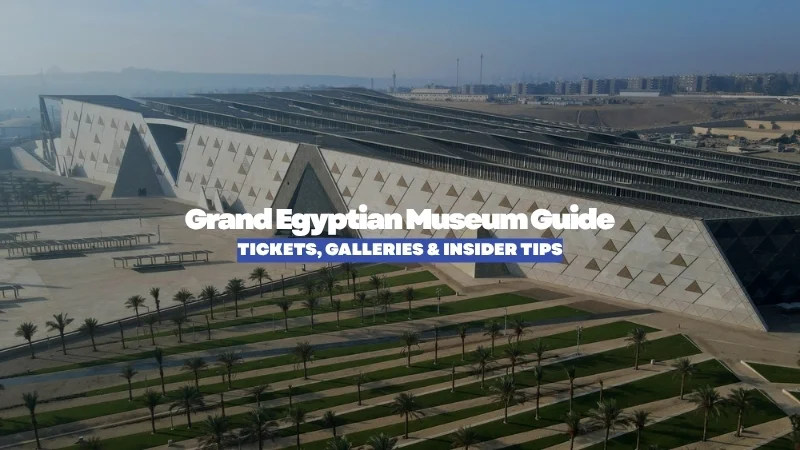
The Grand Egyptian Museum (GEM) is one of the world's most ambitious cultural attractions and a landmark destination for anyone interested in ancient history. Located just minutes from the Giza Pyramids, it houses the largest archaeological collection dedicated to a single civilization, bringing together thousands of years of Egyptian history under one roof.
Whether you're visiting Egypt for the first time or returning to explore its rich heritage, this guide will help you plan a smooth and rewarding visit. From purchasing tickets and choosing the best time to go, to discovering the museum's most remarkable galleries and visitor services, you'll find everything you need in one place.
To learn more about the museum's history, architecture, and its journey to becoming Egypt's newest cultural landmark, read our Grand Egyptian Museum: Egypt's New Cultural Icon.
The Grand Egyptian Museum is more than a museum—it's a comprehensive journey through over 7,000 years of Egyptian civilization.
Designed as one of the largest archaeological museums ever built, GEM combines cutting-edge exhibition technology with one of history's greatest collections of ancient artifacts. Interactive displays, spacious galleries, immersive storytelling, and panoramic views of the Giza Pyramids create an experience unlike any other museum in the world.
Some of its most remarkable features include:
The complete collection of Tutankhamun's treasures displayed together for the first time.
The breathtaking Grand Staircase, lined with monumental statues of ancient Egyptian rulers.
The impressive Great Hall, home to the colossal statue of Ramesses II.
Modern exhibition spaces showcasing the evolution of Egyptian civilization from prehistoric times through the Greco-Roman period.
Architectural design that frames spectacular views of the nearby pyramids.
Whether you're passionate about archaeology, architecture, photography, or world history, the museum offers something for every visitor.
Planning ahead is one of the easiest ways to make your visit to the Grand Egyptian Museum smooth and enjoyable. While tickets may sometimes be available at the entrance, booking online in advance is strongly recommended—especially during weekends, holidays, and peak tourist seasons.
Note: Admission policies, ticket prices, and visitor categories may change. Always confirm the latest information through the museum's official website before your visit.
The Grand Egyptian Museum generally offers different ticket categories based on visitor type. These may include:
Egyptian citizens
International visitors
Students (with valid identification)
Children (subject to age requirements)
Senior citizens (where applicable)
Visitors with disabilities and accompanying caregivers (subject to museum policy)
Special guided tour tickets
Temporary exhibition tickets (when applicable)
Some exhibitions or special experiences may require a separate admission ticket.
Ticket prices vary depending on several factors, including:
Visitor nationality
Age category
Student status
Temporary exhibitions
Ticket type (guided or non-guided, when available)
Some visitors may also have the option to choose between guided and non-guided tickets. Guided tickets typically include a museum-led tour or expert commentary, making them ideal for visitors who want deeper historical insights. Non-guided tickets provide access to the galleries at your own pace and are often preferred by independent travelers and returning visitors.
As ticket categories, availability, and admission fees may change, it's always best to check the museum's official website before purchasing your tickets.
Although tickets may sometimes be available at the entrance, booking online is the most convenient option. It allows you to:
Secure your preferred visiting date.
Reduce waiting times at the entrance.
Receive a digital ticket with a QR code.
Avoid disappointment during weekends, public holidays, and peak tourist seasons.
Booking your visit typically takes only a few minutes.
Go to the official Grand Egyptian Museum booking platform.
Choose the appropriate category, such as:
International Visitor
Egyptian Visitor
Student
Child
Guided Tour (if available)
Standard Admission
Select your preferred date and, if available, your entry time. Morning time slots are often quieter and offer a more relaxed experience.
Provide the required details, which may include:
Full name
Email address
Phone number
Nationality
Passport information (for certain visitor categories)
Make sure all information matches your identification documents.
Pay using one of the accepted online payment methods. Once your payment is confirmed, you'll receive a confirmation email with your electronic ticket.
On the day of your visit, simply show the QR code on your smartphone or present a printed copy. Keep a valid ID with you in case verification is required.
Museum opening hours may change depending on the season, special events, or official holidays.
Visitors should always verify the latest schedule before traveling.
Generally, the museum operates throughout the week with extended daytime and evening hours.
Typical operating schedule includes:
Morning opening
Evening closing
Final admission approximately one hour before closing
Special events or temporary exhibitions may follow different schedules.

Choosing the right time can greatly improve your experience.
Best for:
Smaller crowds
Comfortable temperatures
Better photography
Families
History enthusiasts
Early visitors often enjoy quieter galleries and shorter queues.
The museum tends to become busier as tour groups arrive.
Expect:
More visitors
Longer queues at popular exhibits
Busier restaurants and cafés
If you visit during the afternoon, allow extra time for your itinerary.
This is another excellent option.
Benefits include:
Softer natural light
Pleasant outdoor temperatures
Beautiful pyramid views
A more relaxed atmosphere as some tour groups depart
For the most enjoyable experience, consider visiting:
Tuesday
Wednesday
Thursday
These weekdays are often less crowded than weekends.
If possible, avoid:
Public holidays
National celebrations
School vacations
Peak tourism periods
Friday and Saturday afternoons
Your ideal visit depends on your interests.
Perfect if you want to see the museum's highlights, including:
Great Hall
Grand Staircase
Tutankhamun Galleries
Pyramid viewpoint
Ideal for most visitors. You'll have enough time to:
Explore multiple galleries
Read exhibition information
Take photographs
Enjoy a café break
Visit the museum shop
Recommended for:
Archaeology enthusiasts
Researchers
Photographers
Families with children
Visitors joining guided tours
A full day allows you to experience the museum at a relaxed pace without rushing through the exhibitions.
Arrive 20–30 minutes before your scheduled entry time.
Wear comfortable walking shoes—the museum covers a vast area.
Bring a reusable water bottle if permitted under current visitor policies.
Download any official museum app or audio guide before your visit if available.
Keep your ticket and identification easily accessible during entry.
Consider visiting the Giza Pyramids on the same day if your schedule allows, but allocate sufficient time for each attraction rather than rushing both experiences.

The Grand Egyptian Museum is one of the largest archaeological museums ever built, and exploring it without a plan can quickly become overwhelming. Choosing a structured itinerary will help you experience the museum's highlights while making the best use of your time.
Whether you have only a few hours or an entire day, the following itineraries are designed to help you enjoy the museum at a comfortable pace.
Best for:
First-time visitors
Cruise passengers
Travelers with limited time
Visitors combining GEM with the Giza Pyramids
Your visit begins in the museum's spectacular entrance hall.
The centerpiece is the colossal statue of Ramesses II, one of ancient Egypt's most powerful pharaohs. Standing before this monument immediately sets the tone for the rest of the museum.
Take a few minutes to admire the architecture, orientation displays, and introductory exhibits before continuing.
Don't miss:
The monumental entrance
The Ramesses II statue
The natural lighting and modern architecture
The Grand Staircase is one of the museum's defining architectural features.
Rather than serving only as a staircase, it functions as a chronological journey through ancient Egyptian history. Monumental statues of kings, queens, deities, and important historical figures line both sides, creating one of the museum's most impressive visual experiences.
Take your time walking upward and reading the exhibit descriptions.
Photography Tip One of the best photographs can be taken from the base of the staircase looking upward, capturing both the statues and the museum's striking architecture.
For many visitors, this is the highlight of the museum.
The galleries dedicated to King Tutankhamun bring together his treasures in an unprecedented display, allowing visitors to appreciate the richness of the young king's tomb.
Among the remarkable objects are:
The famous gold funerary mask
Royal furniture
Ceremonial chariots
Jewelry
Weapons
Decorative chests
Personal belongings
Ritual objects
Instead of rushing through the collection, spend time reading the exhibit labels to understand the significance of each artifact.
Choose one section that best matches your interests.
Ancient Egyptian Kings Explore sculptures, royal monuments, and ceremonial artifacts connected with Egypt's rulers.
Daily Life Discover how ordinary Egyptians lived through displays of tools, clothing, pottery, writing, agriculture, and domestic life.
Religion and Beliefs Learn about Egyptian mythology, temples, funerary customs, and religious symbolism.
Before leaving, head to the panoramic viewing area overlooking the Giza Pyramids.
This is the perfect place to:
Relax after your visit
Take memorable photographs
Appreciate the museum's unique location
Enjoy a coffee before continuing your day
Recommended for:
History enthusiasts
Archaeology lovers
Photographers
Families
Researchers
Visitors who want to experience every major gallery
A full-day visit allows you to enjoy the museum without feeling rushed.
Explore the Great Hall Spend extra time appreciating the museum's architecture and introductory exhibitions.
Walk the Grand Staircase Study the monumental statues in greater detail and enjoy the changing perspectives as you move upward.
Visit the Tutankhamun Collection Allow at least 90 minutes for this section. The exhibits reveal not only magnificent craftsmanship but also insights into royal life, religion, burial practices, and ancient Egyptian beliefs.
Take a break at one of the museum's cafés or restaurants. This is an excellent opportunity to recharge before exploring the remaining galleries.
Continue through the museum's permanent exhibitions.
Recommended themes include:
Ancient Egyptian society
Royal ceremonies
Religious practices
Sculpture
Ancient technology
Trade and craftsmanship
Writing and hieroglyphics
Funerary traditions
Rather than trying to photograph everything, focus on a few galleries that genuinely interest you.
If available during your visit, consider participating in:
Audio-guided tours
Educational exhibitions
Interactive digital displays
Family activities
Children's learning areas
These experiences provide additional historical context beyond the traditional displays.
Before leaving, visit the museum shop.
Popular souvenirs include:
Art books
Replica artifacts
Educational publications
Jewelry inspired by ancient Egypt
Museum-exclusive gifts
Purchasing from the official shop also supports museum programs and exhibitions.
If you're short on time, these are the exhibits you should prioritize.
The museum's iconic entrance statue is among the largest and most impressive sculptures from ancient Egypt.
An architectural masterpiece that combines monumental sculpture with chronological storytelling.
The world's most comprehensive display dedicated to the famous boy king.
Massive statues representing some of Egypt's greatest rulers showcase the evolution of Egyptian sculpture over thousands of years.
Beautiful reliefs, painted objects, ceremonial furniture, and religious sculptures demonstrate the extraordinary craftsmanship of ancient Egyptian artists.
These exhibitions reveal how ordinary Egyptians worked, traded, farmed, dressed, worshipped, and raised their families.
One of the museum's most memorable features is the visual connection between the museum and the nearby Giza Pyramids. It's an ideal location to end your visit and reflect on the extraordinary history you've just explored.
Visit the Tutankhamun galleries early if they are expected to be busy.
Alternate between major galleries and short rest breaks to avoid museum fatigue.
Read the introductory panels before examining individual artifacts—they provide valuable historical context.
If you're especially interested in a particular historical period, don't hesitate to spend more time there instead of trying to see every exhibit.
Leave at least 30 minutes at the end of your visit for the panoramic terrace and museum shop.

A visit to the Grand Egyptian Museum is about more than viewing extraordinary artifacts—it's about enjoying a complete cultural experience. From stunning photography opportunities and excellent dining options to accessible facilities and visitor-friendly services, the museum is designed to accommodate a wide range of travelers.
This section covers everything you need to know to make your visit comfortable, enjoyable, and memorable.
The Grand Egyptian Museum is one of Egypt's most photogenic cultural landmarks. Its modern architecture, dramatic exhibition spaces, and panoramic views create outstanding photo opportunities throughout the visit.
Before taking photos, always pay attention to museum signage, as photography policies may vary between galleries or temporary exhibitions.
The Great Hall is one of the first spaces visitors encounter and remains one of the museum's most iconic locations.
The colossal statue of Ramesses II, combined with the enormous glass façade and natural daylight, creates an impressive backdrop.
Best photos:
Wide-angle shots of the entrance hall
Portraits with Ramesses II
Architectural details
Symmetrical compositions
Many photographers consider the Grand Staircase the museum's most spectacular interior space.
The arrangement of monumental statues creates dramatic depth from nearly every angle.
Photography ideas:
Shoot from the bottom looking upward.
Capture the statues against the museum's glass walls.
Use the staircase's symmetry for balanced compositions.
Few museums in the world offer views comparable to those from GEM.
The panoramic terrace provides direct views toward the Pyramids of Giza, creating a unique combination of modern architecture and one of the world's oldest monuments.
The best lighting is typically:
Shortly after opening
Late afternoon
Around sunset (depending on seasonal opening hours)
Even visitors with little interest in archaeology often admire the museum's contemporary design.
Look for:
Geometric stone façades
Glass walls
Open courtyards
Modern architectural lines
Reflections and natural light
These areas are perfect for architectural photography.
Several seating areas provide beautiful views of the pyramids. These locations are ideal for relaxed travel photographs while enjoying a coffee or meal.
To help preserve the museum's collections, visitors are generally expected to follow these guidelines:
Photography with smartphones is usually permitted in many public areas.
Flash photography should not be used around artifacts.
Tripods, lighting equipment, and professional filming gear may require prior permission.
Some temporary exhibitions may prohibit photography entirely.
Always follow instructions from museum staff.
When in doubt, check the signs posted outside each gallery.
Exploring the museum can easily take several hours, making meal breaks an important part of your visit.
The Grand Egyptian Museum offers a variety of dining options suitable for different budgets and preferences.
Visitors can enjoy:
Coffee
Tea
Fresh juices
Soft drinks
Light snacks
Pastries
Sandwiches
Many cafés also provide comfortable seating areas for short breaks.
For visitors planning a longer stay, restaurants typically offer:
Egyptian cuisine
International dishes
Vegetarian options
Family-friendly meals
Desserts
Menus and operating hours may vary throughout the year.
Avoid visiting restaurants during peak lunch hours if possible.
Consider having lunch slightly earlier or later than tour groups.
Stay hydrated, especially during warmer months.
Allow enough time to enjoy your meal without rushing through the museum.
The museum has been designed to provide a comfortable experience for both local and international visitors.
Available services may include:
Friendly staff can assist with:
Directions
Gallery information
Tour schedules
Lost property
Accessibility services
General visitor questions
Depending on availability, visitors may choose:
Mobile audio guides
Museum apps
Rental audio devices
Audio guides are especially useful for independent travelers interested in learning more about ancient Egyptian history.
Before leaving, stop by the official museum store.
Popular items include:
Museum publications
Historical books
Children's educational materials
Replica artifacts
Jewelry inspired by ancient Egypt
Handmade souvenirs
Exclusive museum merchandise
The museum includes numerous places to sit and relax throughout the visit.
These rest areas are particularly helpful for:
Families
Senior visitors
Long museum visits
Visitors requiring short breaks between galleries
Modern restroom facilities are available throughout the museum. Family-friendly facilities and accessible restrooms are also provided.
The Grand Egyptian Museum has been designed to welcome visitors of all abilities.
Accessibility features may include:
Wheelchair-accessible entrances
Elevators
Accessible pathways
Wide exhibition spaces
Accessible restrooms
Seating throughout the museum
Visitors who require additional assistance are encouraged to contact the museum before their visit to learn about available services.
There is no formal dress code.
However, comfortable clothing is strongly recommended because visitors often spend several hours walking through large exhibition spaces.
Recommended items include:
Comfortable walking shoes
Lightweight clothing during summer
A light jacket during cooler months
A hat and sunscreen if spending time outdoors before or after the museum visit
Consider bringing:
Your ticket (digital or printed)
Passport or identification (if required)
Fully charged smartphone
Portable charger
Reusable water bottle (if permitted under current visitor policies)
Credit or debit card
Comfortable backpack
Travel light whenever possible.
Museum security procedures help protect both visitors and the collections.
While policies may change, visitors are generally advised not to bring:
Large suitcases
Oversized backpacks
Outside food (subject to current policy)
Large alcoholic beverages
Dangerous objects
Sharp tools
Weapons
Fireworks or flammable materials
Drones
Professional filming equipment without authorization
Some items may be stored in designated lockers where available.
Respectful behavior helps preserve one of the world's greatest archaeological collections.
Visitors should:
Avoid touching artifacts.
Stay behind protective barriers.
Keep voices low.
Follow marked visitor routes.
Supervise children at all times.
Follow instructions from museum staff.
Dispose of waste responsibly.
Remember that many of these objects are thousands of years old and require careful preservation.
Experienced travelers often recommend the following:
Arrive early to enjoy quieter galleries.
Wear comfortable shoes—you'll walk more than you expect.
Don't rush through every gallery; quality is better than quantity.
Take regular breaks to avoid museum fatigue.
Save the panoramic terrace for the end of your visit.
Visit the museum shop before leaving—you may not be able to re-enter once you exit.
Keep your camera or phone ready, but don't spend the entire visit behind a screen. Some of the most memorable moments are best experienced firsthand.
A little preparation can make your visit even more rewarding.
Confirm opening hours and ticket information on the museum's official website.
Book your tickets in advance whenever possible.
Wear comfortable walking shoes.
Carry a fully charged phone or camera.
Arrive at least 20–30 minutes before your scheduled entry.
Bring a reusable water bottle if permitted under current visitor policies.
Travel light to make moving through the museum easier.
Start with the Great Hall and Grand Staircase before exploring the main galleries.
Spend extra time in the exhibitions that interest you most instead of trying to see everything.
Take regular breaks to avoid museum fatigue.
Respect museum staff, exhibit barriers, and photography rules.
End your visit at the panoramic terrace for unforgettable views of the Giza Pyramids.
The Grand Egyptian Museum represents far more than a collection of remarkable artifacts. It is a celebration of one of humanity's greatest civilizations, presented through innovative architecture, immersive storytelling, and thoughtfully curated exhibitions.
Whether you are fascinated by the treasures of Tutankhamun, inspired by monumental sculpture, or simply eager to learn more about ancient Egypt, the museum offers an experience that is both educational and unforgettable.
Its location beside the iconic Pyramids of Giza makes it an essential stop for visitors seeking to understand Egypt's past while experiencing one of the world's most impressive modern museums.
With careful planning, comfortable pacing, and a spirit of curiosity, your visit to the Grand Egyptian Museum can become one of the defining moments of your journey through Egypt.
The Grand Egyptian Museum offers an unforgettable journey through thousands of years of Egyptian history, from the iconic treasures of Tutankhamun to breathtaking monumental sculptures and immersive galleries. Whether you're planning a short visit or a full day of exploration, a little preparation will help you make the most of your experience.
If you're planning a trip to Egypt, consider combining your museum visit with the Giza Pyramids and other iconic attractions for a truly memorable itinerary. Explore more Egypt travel packages, day tours, and personalized itineraries with Kadmar Travel and start planning your Egyptian adventure today.
Yes, tickets may be available for purchase at the museum entrance, subject to availability. However, booking online in advance is highly recommended, especially during weekends, public holidays, and peak tourist seasons, as it helps secure your preferred visit date and reduces waiting times.
Photography is generally permitted in many public areas and permanent galleries for personal use. However, flash photography, tripods, professional filming equipment, and photography in certain temporary exhibitions may be restricted. Always check the signage and follow the instructions of museum staff.
Most visitors spend 4 to 6 hours exploring the museum, which provides enough time to see the major galleries, the Grand Staircase, Tutankhamun's treasures, and enjoy a meal or coffee break. If you're short on time, you can see the main highlights in about 2 to 3 hours.
Guided tours are an excellent choice for first-time visitors and anyone interested in learning more about ancient Egyptian history. A knowledgeable guide can provide historical context and highlight important artifacts that you might otherwise overlook. If you prefer to explore at your own pace, a standard self-guided ticket is also a great option.
Yes. The Grand Egyptian Museum is family-friendly and offers spacious galleries, interactive exhibits, accessible facilities, and plenty of areas to rest. Children with an interest in history and ancient Egypt are likely to enjoy the experience, especially the impressive statues and the Tutankhamun galleries.
Yes, the Grand Egyptian Museum provides on-site parking for visitors. Parking availability and any applicable fees may vary, so it's a good idea to check the latest visitor information before your trip, particularly during busy periods or special events.
Ready to embark on your Egyptian adventure? Contact Kadmar Travel today and let us turn your travel dreams into reality.
Reach out to our dedicated team at Inbound@kadmartravel.com or call us at +2034839726
Reach out to our dedicated team at Inbound@kadmartravel.com, call us at +2034839726, or contact us through WhatsApp at +201286739037.
Don't just visit Egypt; experience it with Kadmar Travel
Or fill out the form below and we will call you back for any information needed.