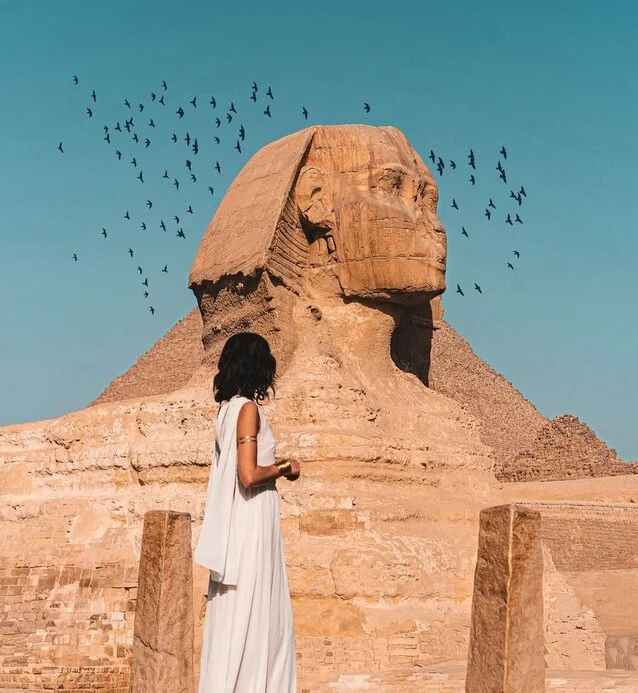

Few experiences in Egypt come close to arriving at Karnak Temple at sunrise, when the light turns the sandstone columns amber and the site is still quiet. For cruise passengers docking at Safaga on the Red Sea, Luxor is accessible in a single day — and for many, it becomes the defining memory of their voyage.
The round trip covers about 480 kilometres across the Eastern Desert, which sounds demanding on paper. In practice, the drive through the stark mountain passes of the Red Sea Hills is genuinely scenic, and a professional driver handles all the logistics. By 10:00 AM, you are standing beside 3,400-year-old monuments. By evening, you are back on board.
This guide covers everything you need to plan a smooth, rewarding excursion — from choosing your transport to making sense of the West Bank's ancient necropolis.
05:30 AM — Breakfast on board; collect your day bag
06:00 AM — Depart Safaga Port by private car or coach
09:30 AM — Cross into the Nile Valley; first views of green fields and feluccas
10:00 AM — Karnak Temple Complex (2 – 2.5 hours)
12:30 PM — Lunch on the East Bank, ideally overlooking the Nile
14:00 PM — Ferry crossing to the West Bank
14:30 PM — Valley of the Kings (1.5 – 2 hours)
16:30 PM — Temple of Hatshepsut at Deir el-Bahari (45 minutes)
17:15 PM — Depart for Safaga
20:30 PM — Return to port
Important: Always confirm your ship's "all aboard" time before finalising your return schedule. Build in a minimum 90-minute buffer for the drive back.
The drive from Safaga to Luxor follows a well-maintained dual carriageway through the Red Sea Governorate before descending into the Nile Valley near Qena. Depending on conditions at security checkpoints — which are standard procedure on this route — travel time ranges from three to four hours each way.
The landscape itself is worth your attention. The road cuts through rust-coloured mountains before opening suddenly onto irrigated fields and palm groves. That moment when the desert gives way to green is one of the more striking geographical contrasts you will encounter anywhere in Egypt.
The comfortable window for this excursion runs from October through April. Winter temperatures in Luxor hover around 20–25°C (68–77°F), making long walks through open-air sites genuinely pleasant.
Travelling between May and September is possible but noticeably harder. Midday temperatures regularly exceed 40°C (104°F) in the Nile Valley, and exposed sites like the Valley of the Kings offer very little shade.
Cruise lines including MSC, Costa, and Viking offer Luxor as a pre-booked shore excursion. The main advantage is guaranteed logistics: your tour operator coordinates directly with the ship, and if there is an unexpected delay, the vessel waits. For first-time travellers or those uncomfortable navigating independently, this is a sensible choice.
The trade-off is a fixed itinerary. You move at the group's pace, which may mean less time at the sites that interest you most.
Booking a private car and licensed guide independently — or through a reputable DMC — gives you control over the day. You can spend an extra hour in the hypostyle hall at Karnak, skip sites that don't interest you, and choose your lunch restaurant without being steered toward a tourist-set menu.
Private excursions cost more per person but suit couples, families, and anyone with a specific interest in Egyptology. They are also worth considering if your cruise schedule gives you a tight window: a private driver will know exactly how long the border formalities take and can time the return accordingly.
One practical note: whichever option you choose, book in advance. Reputable private operators fill up during peak season, and last-minute arrangements at the port rarely deliver the same quality.

Karnak is not a single temple but a vast religious precinct that was expanded, modified, and embellished by successive pharaohs over roughly 2,000 years. At its peak, it employed tens of thousands of priests, craftsmen, and administrators. It was, in effect, the Vatican of ancient Egypt.
The scale becomes real only when you are inside it. The complex covers over 100 hectares and contains pylons, chapels, sacred lakes, and avenues of sphinxes — all within one walled precinct.
The centrepiece is a forest of 134 sandstone columns, the tallest rising to 21 metres. Walk between them slowly. The carved reliefs — battle scenes, ritual offerings, cartouches of pharaohs — cover every surface. Morning light filters through gaps in the upper stonework in a way that no photograph quite captures.
The hall was begun under Seti I and completed by Ramesses II in the 13th century BC. It remains the largest columned hall of any religious building in the world.
Beyond the main temple axis, the Sacred Lake provided water for daily ritual purification. Today it is a quiet spot to pause before the heat of midday builds. Nearby, two of the original six obelisks erected by Hatshepsut still stand — monolithic granite shafts quarried at Aswan and transported over 200 kilometres by river barge.
Practical tip: Arrive at Karnak as early as possible. By 11:00 AM, tour groups from Luxor's hotels begin arriving in large numbers.
Most quality operators include a sit-down lunch at a riverside restaurant. If you have a private guide, ask for somewhere away from the main tourist drag — there are several mid-range Nile-view restaurants near the Luxor corniche that serve well-prepared Egyptian food without the inflated pricing.
Worth trying: koshary (a layered dish of pasta, lentils, and spiced tomato sauce), grilled kofta, and ful medames (slow-cooked fava beans with olive oil and cumin). Fresh bread arrives hot. Meals are unhurried, which is exactly what you need before the West Bank.

The short ferry crossing from the East Bank takes roughly ten minutes. As the boat pulls away, the skyline of modern Luxor recedes and the Theban Hills fill the horizon ahead — ochre cliffs riddled with tombs that have been here since the Bronze Age.
The ancient Egyptians located their royal necropolis on the west bank deliberately: the setting sun, which disappeared each evening into the desert hills, was understood as the dead sun descending into the underworld. Every evening, it came back. The geography was theological.
Sixty-three royal tombs have been discovered in this dry valley since systematic excavation began in the 18th century. Most were cut during the New Kingdom period (1550–1070 BC) and belonged to pharaohs of the 18th, 19th, and 20th Dynasties — the era of Ramesses II, Seti I, Thutmose III, and Tutankhamun.
Standard tickets cover entry to three tombs. Choosing which three is worth thinking about in advance, as the sites open to visitors rotate periodically.
KV9 (Ramesses VI): Large, well-preserved, and spectacular. The ceiling of the burial chamber is covered in astronomical imagery — stars, constellations, and the journey of the sun through the underworld. One of the most visually impressive in the valley.
KV11 (Ramesses III): The longest tomb currently open to visitors, with a series of decorated side chambers that show daily life rather than purely religious scenes.
KV62 (Tutankhamun): Requires a separate ticket and draws the largest queues, but the experience of seeing the young king's mummy in situ — still in the outermost of his nested sarcophagi — is unlike anything in a museum display case.
Practical notes:
Photography inside most tombs requires a separate camera permit or is restricted entirely; check current rules on arrival.
Carry a small torch or use your phone light — some chambers are dimly lit.
The valley has very little shade. A wide-brimmed hat is not optional in summer months.

The Mortuary Temple of Hatshepsut sits at the base of a sheer limestone cliff about ten minutes from the Valley of the Kings. Three colonnaded terraces rise in clean horizontal lines against the rock face, creating a composition that still looks almost contemporary.
Hatshepsut ruled Egypt as pharaoh for approximately twenty years during the 15th century BC — one of the longest and most prosperous reigns of the New Kingdom. The reliefs inside document, among other things, a trading expedition to the land of Punt (likely present-day Somalia or Eritrea), complete with detailed depictions of exotic animals, incense trees, and foreign dignitaries.
After her death, her successor Thutmose III had many of her images and cartouches defaced. The temple survived regardless, and Hatshepsut was recovered by modern archaeology. She is now considered one of the most successful rulers in Egyptian history.
Allow 45 minutes here. The terraces require walking up ramps in full sun; the pace of the visit is calmer than Karnak, and the cliff backdrop makes for excellent photographs in afternoon light.
Water: Carry at least 1.5 litres per person; refill when possible. Dehydration in the desert heat is a genuine risk, not a precaution.
Sun protection: SPF 50+ sunscreen, a hat, and sunglasses. Reapply every two hours at open sites.
Footwear: Closed-toe walking shoes with good soles. Temple floors are uneven stone; sandals are uncomfortable and sometimes prohibited.
Clothing: Lightweight, light-coloured fabrics (linen or cotton). Shoulders and knees should be covered at religious sites — a light scarf serves this purpose without adding much weight.
Cash: Egyptian pounds for tips, small purchases, and optional extras (camera permits, Tutankhamun's tomb entrance). ATMs are available in Luxor city, but it is easier to carry what you need.
The route between Safaga and Luxor passes through a security-monitored zone. Convoys operate at certain times of day; your driver or operator will know the schedule. This is routine and does not affect the day's logistics.
Tap water is not safe to drink. Stick to sealed bottles throughout the day.
Tipping (baksheesh) is customary in Egypt and forms part of the income structure for guides, drivers, and site staff. As a general reference: 100–150 Egyptian pounds per person for a site guide who accompanies you through a tomb is appropriate. Your main guide and driver should receive tips at the end of the day, calculated on the quality and length of service.
Photography is generally permitted in temple precincts but restricted or charged inside tombs. Never touch the carved reliefs — the oils from skin accelerate deterioration. At all sites, speak quietly and follow your guide's instructions regarding restricted areas.
Is one day really enough for Luxor?
For the major highlights — Karnak, the Valley of the Kings, and Hatshepsut's temple — yes. You will not see everything Luxor has to offer, but you will see its most significant sites with enough time to understand what you are looking at. A rushed tick-box tour of six sites in one day is less rewarding than a focused visit to three done well.
Can I book this trip independently, without a cruise excursion?
Yes. Travellers staying at hotels in Hurghada frequently make the same trip by private car. The logistics are identical; the only difference is that you arrange transport from your hotel rather than from the port.
How do I manage the ship's departure time?
The return leg is non-negotiable. Tell your driver your "all aboard" time on departure, and plan to be back at the pier at least 90 minutes before that. Reputable operators know these margins well and schedule accordingly. If you are on a ship's organised excursion, the vessel is contractually obligated to wait for delays caused by the tour itself.
What is the best tomb to visit if I can only choose one?
KV9 (Ramesses VI) for artistic quality and scale. KV62 (Tutankhamun) if you want the emotional experience of seeing the pharaoh in his burial chamber. Both are valid answers depending on what you are looking for.
Is the trip suitable for children?
Yes, with preparation. Children need more water, more frequent breaks, and more shade than adults in this climate. The sites themselves — particularly the Valley of the Kings — tend to fascinate children who have any interest in ancient history. The tombs involve walking through narrow passages, which some younger children find exciting and others find uncomfortable.
Luxor rewards travellers who arrive with some context. Reading a brief account of the New Kingdom, or watching a short documentary on Karnak or Tutankhamun before your cruise, will significantly enhance what you see on the ground. The monuments are extraordinary even without background knowledge — but they become genuinely moving when you understand what they represent.
The journey from Safaga is long. The heat in the Nile Valley is real. The sites are busy during peak season. None of this diminishes the experience. Very few places on Earth carry this weight of history in this kind of physical form. For travellers who make the effort, the day tends to stay with them.
For a seamless, professionally guided experience from Safaga Port, consider booking a private day trip with a specialist operator.
Recommended: Kadmar Travel cruise excursions from Safaga to Luxor.
Ready to embark on your Egyptian adventure? Contact Kadmar Travel today and let us turn your travel dreams into reality.
Reach out to our dedicated team at Inbound@kadmartravel.com or call us at +2034839726
Reach out to our dedicated team at Inbound@kadmartravel.com, call us at +2034839726, or contact us through WhatsApp at +201286739037.
Don't just visit Egypt; experience it with Kadmar Travel
Or fill out the form below and we will call you back for any information needed.